Experienced Gynecologist in Gurgaon
-min.png)
Ovarian cysts are fluid-filled sacs that form on or inside the ovaries. While many ovarian cysts are harmless and may resolve on their own, some can cause discomfort, heavy menstrual bleeding, hormonal imbalance, or pelvic pain.
Understanding how food choices may support hormonal balance and overall reproductive health.
Ovarian cysts are fluid-filled sacs that form on or inside the ovaries. Although most are harmless and dissolve on their own, some may cause discomfort, excessive menstrual flow, or other symptoms.
Dietary changes, such as avoiding certain foods, are not considered a direct treatment for ovarian cysts. However, certain eating patterns may influence hormonal balance, weight management, inflammation, and overall reproductive health.
Nutrition also plays an important role in the management of polycystic ovary syndrome, commonly known as PCOS. PCOS may be associated with obesity, irregular periods, abnormal hormone levels, and the development of multiple small ovarian cysts.
The function of the ovaries and the hormones that regulate the reproductive system are influenced by nutrition. This is why diet is often discussed as a supportive approach for women dealing with ovarian cysts or hormonal imbalance.
However, it is important to understand that diet alone is not a replacement for proper medical evaluation, medicines, monitoring, or surgery when required.
Online searches may show many home remedies such as plant-based diets, raw diets, herbal remedies, and supplements for ovarian cysts.
But there is limited evidence that such methods can treat ovarian cysts effectively. Standard care may include watchful waiting, medical therapy, or surgery in selected cases.
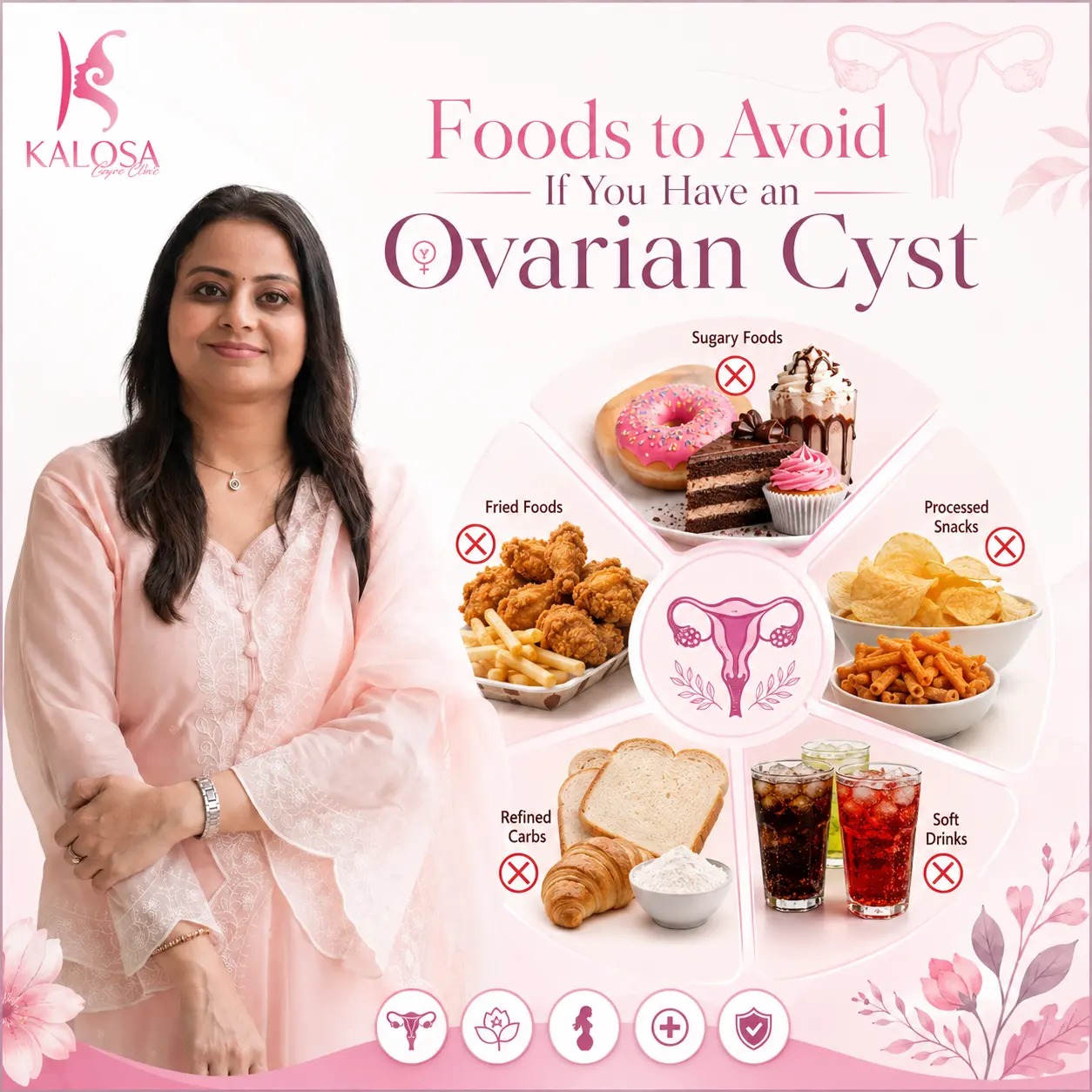
Some preliminary data suggests that certain dietary patterns may influence the likelihood of developing ovarian cysts. Eating habits high in red meat, cheese, refined foods, and high-fat items may negatively affect hormonal balance in some women.
On the other hand, a balanced diet rich in vegetables, fiber, hydration, and whole foods may support better metabolic and hormonal health.
Certain foods may worsen inflammation, weight gain, insulin spikes, and hormonal imbalance.
Red meats such as pork, beef, and lamb should be avoided or limited. These foods are heavy in fat and may contribute to hormonal imbalance.
Fried foods such as French fries, deep-fried snacks, and fried chicken may cause weight gain and may contain refined oils that can disturb hormone balance.
Butter, cheese, cream, packaged food, junk food, and confectioneries may raise cholesterol and increase inflammation when consumed in excess.
Soft drinks, processed juices, cakes, pastries, cookies, and sweets are high in refined sugar and may trigger hormonal imbalance.
Reducing these items may support better hormonal and metabolic health.
Alcohol can disturb hormonal balance and may negatively affect reproductive health. Women prone to ovarian cysts should avoid alcohol or reduce intake as advised by a doctor.
Excess caffeine from coffee, tea, sodas, and soft drinks may contribute to dehydration and inflammation. Limiting caffeine may help support better overall health.
White bread, refined flour, short-grain rice, and similar foods may cause sudden blood sugar spikes and increased insulin production.
Potatoes, corn, pasta, and bread may cause insulin surges if consumed in excess. Limiting these foods may help women with PCOS or insulin resistance.
A balanced diet may support hormone balance, weight control, and overall reproductive wellness.
Include fruits, vegetables, whole grains, and legumes to support digestion and metabolic health.
Weight management is especially important for women with PCOS, hormonal imbalance, and irregular periods.
Proper hydration supports digestion, metabolism, and overall body function.
Processed foods may contain unhealthy fats, refined sugar, and additives that can affect health.
Diet should support medical treatment, not replace proper consultation, diagnosis, or surgery when required.
Regular gynecological evaluation helps detect ovarian cysts early and decide the right treatment plan.
Consult your doctor if you suspect you have an ovarian cyst or if you are experiencing stomach pain, pelvic discomfort, or menstrual changes.
While eating a nutritious diet is always a good idea, there is no proof that diet alone can cure painful or large ovarian cysts. It may not be a replacement for medicine or surgery.
Seek emergency medical attention if you have unexpected abdominal pain, dizziness, fainting, or severe vaginal bleeding.
If you are seeking ovarian cyst treatment in Gurgaon, you should consult Dr. Deepti Asthana. She is a senior gynaecologist at Fortis Hospital, Gurugram and Director at KALOSA Clinics.
She is well educated, highly experienced, and known for explaining the disease condition clearly to her patients. Her approach focuses on accurate diagnosis, efficient treatment, and supportive care.
In cases where surgery is required, Dr. Deepti Asthana offers expert surgical guidance and advanced gynecological care.
Book AppointmentDiet can support your overall reproductive health, but painful, large, or complex ovarian cysts need proper medical evaluation.
Consult Dr. Deepti Asthana for expert ovarian cyst diagnosis, diet guidance, medical management, and advanced gynecological treatment in Gurgaon.