Online Consultation
Ovarian Cyst Treatment

Ovarian Cystectomy by LaparoscopyWhy you need it, and what happens during surgery

Posted by Dr. Deepti Asthana on 09-08-2026

The ovaries are located on both sides of the uterus, in the lower abdomen. Women have two ovaries, which are in charge of producing eggs, as well as progesterone and oestrogen. Cysts can form in the ovaries or on their surface — pockets or sacs filled with fluid.

Many women develop large cysts which are usually painless and produce no symptoms. If you also have large cysts (more than 4 cm) to worry about, call and book your appointment for the best ovarian cyst treatment in Gurgaon with Dr. Deepti Asthana.

Book Your Consultation
Ovarian cyst treatment in Gurgaon - Dr Deepti Asthana

What is an ovarian cyst?

Ovarian cysts are pockets or sacs filled with fluid that form in the ovaries or on their surface.

The ovaries are located on both sides of the uterus, in the lower abdomen, and are in charge of producing eggs, progesterone and oestrogen.

Cysts can form in the ovaries or on their surface. These ovarian cysts are pockets or sacs filled with fluid.

Many women develop large cysts which are usually painless and produce no symptoms at all.

A cyst larger than 4 cm is generally the point at which it is worth having assessed by a gynaecologist.

Types of ovarian cysts explained by Dr Deepti Asthana

Types and causes of ovarian cyst

Ovarian cysts come in a variety of shapes and sizes. A functional cyst is the most frequent type, which is further subdivided into follicular cysts and corpus luteum cysts.

Type What it is How it forms
Follicle cyst A sac in the ovary where an egg develops during the menstrual cycle. Forms if the follicle does not open to release the egg during ovulation.
Corpus luteum cyst Forms after ovulation, from the sac that normally disintegrates once the egg is released. The sac fails to disintegrate, and its opening becomes plugged, trapping fluid inside.
Cystadenoma A noncancerous growth that typically appears on the outer surface of the ovary. Not related to the menstrual cycle; can grow large over time.
Endometrioma Forms when tissue that ordinarily grows inside the uterus expands outside it and adheres to the ovary. Linked to endometriosis; often called a “chocolate cyst” because of its appearance.
Dermoid cyst A sac-like growth on the ovary that may include fat, hair, or other tissue. Present from birth, forming from cells that differentiate abnormally.
Polycystic ovaries A large number of tiny cysts form within the ovary. Associated with PCOS, a hormonal condition rather than a single cyst.
Symptoms of an ovarian cyst

Symptoms

Most ovarian cysts do not cause any symptoms. However, as a cyst grows, some symptoms may appear, such as:

  • Painful bowel movements.
  • Painful intercourse.
  • Breast tenderness.
  • Abdominal swelling or bloating.
  • Pelvic pain during or before the menstrual cycle.
  • Pain in the thighs or lower back.
  • Vomiting and nausea.

These symptoms are generally an indication of ovarian torsion or a ruptured cyst, and both require immediate medical attention.

How an ovarian cyst can
affect the body

01

Ovarian torsion

A large cyst can cause the ovary to twist on its own blood supply. This presents as sudden, severe pain, often with nausea and vomiting, and is a surgical emergency.

These symptoms are generally an indication of ovarian torsion or a ruptured cyst, and both require immediate medical attention.

02

Rupture

A cyst can burst, spilling its contents into the abdominal cavity. This can cause sudden sharp pain and, in some cases, internal bleeding that needs urgent attention.

A rupture is more likely with larger cysts, which is one reason a cyst above 4–5 cm is generally not simply left unmonitored.

03

Disrupted menstruation and fertility

An ovarian cystectomy is a surgical procedure that removes sac-like fluid pockets from the ovary. These cysts disrupt menstruation and can induce infertility, particularly when they distort the normal architecture of the ovary.

Removing the cyst while preserving healthy ovarian tissue is what protects fertility going forward.

04

Pressure symptoms

  • Bloating and a feeling of fullness as the cyst enlarges
  • Pressure on the bladder, causing frequent urination
  • Pressure on the bowel, causing a change in bowel habit
  • Discomfort during exercise or intercourse once a cyst is of a reasonable size

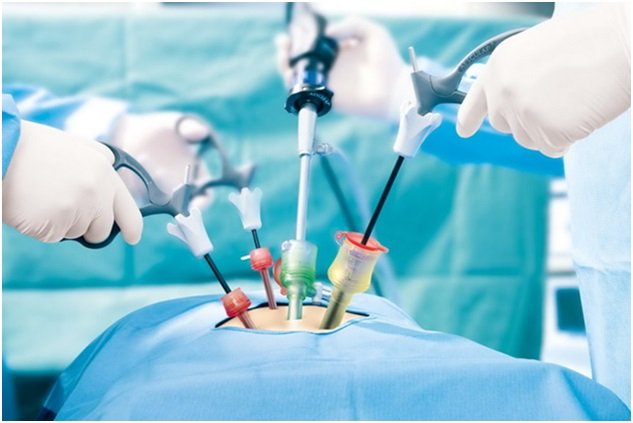
What happens during laparoscopic ovarian cyst treatment?

An ovarian cystectomy removes the cyst using one of a few approaches, chosen according to size and appearance.

  1. Small incisions, usually two to three, are created on the abdomen.
  2. Gas is injected into the abdomen to create space and give the surgeon a clear view.
  3. A small, tube-shaped instrument with a light and camera at the end (the laparoscope) is passed through one incision to inspect the internal organs.
  4. Fine instruments passed through the other incisions are used to free the cyst from the ovary and remove it, often inside a retrieval bag.
  5. The small cuts are closed with dissolvable stitches, which do not need to be removed later.

Nowadays, laparoscopic surgery is preferable since it is less painful, has a faster recovery, a smaller scar, and a shorter hospital stay. Laparoscopy is preferred for ovarian cystectomy since it is a less invasive and less painful procedure, and most patients are able to go home the same or the following day after this operation.

Laparoscopy or laparotomy?

When the cyst is malignant or particularly large, a laparotomy, also known as an open ovarian cystectomy, is advised instead.

  Laparoscopy (keyhole) Laparotomy (open)
How access is made Two to three small incisions in the tummy, with gas used to create space to work A single larger cut is made in the abdomen
When it is used Most ovarian cystectomies When the cyst is malignant or particularly large
Closure Dissolvable stitches Staples or stitches
Hospital stay Most patients go home the same or the following day A few days in hospital
Why it is preferred Less painful, faster recovery, smaller scar, shorter stay Allows the specimen to be sent for detailed laboratory analysis when malignancy is suspected

Instead of making tiny cuts, a single bigger cut is made in the abdomen for a laparotomy, and staples or stitches are used to seal the incision. If the cyst is considered to be malignant, it may be submitted to a laboratory for additional analysis.

Risks, and when to call your doctor

There are some risks associated with ovarian cystectomy, but they are rare in the experienced hands of a skilled surgeon. These include:

  • Bleeding during surgery.
  • Damage to surrounding organs, including the ureter.
  • Infection at the incision site, which is why the warning signs below matter.
  • Recurrence of a cyst in the future, particularly functional cysts.

Following a laparoscopic ovarian cystectomy, patients may have some pain in their tummy, for which pain medication is administered. If you notice any of the following symptoms after leaving the hospital, contact your doctor right away, as you may have an infection: Fever., Heavy bleeding., Vaginal discharge that is dark or smelly., Pain in the abdomen that is worsening rather than settling.

Recovery timeline

The majority of patients recover in six to eight weeks. All intense activity should be avoided for at least two weeks following surgery.

First week
Most women feel noticeably better and are managing daily activities with some care.
Two weeks
All intense activity should still be avoided; light activity and walking are encouraged.
Six to eight weeks
The majority of patients have fully recovered from a laparoscopic ovarian cystectomy.

Recovery time

After a laparoscopy, your body needs time to repair the surgical wound and go back to normal. Recovering from surgery is a highly individualised process. You may be able to achieve it faster if you follow your doctor’s recommendations. The majority of women feel better within the first week of surgery. You can speed up your recovery by following some simple guidelines:

  • Establish and stick to a daily schedule, such as sleeping and rising early.
  • Eat a good, healthful, high-fibre, balanced diet that includes fresh fruits and vegetables, and drink up to 2 litres of fluids, primarily water.
  • Quit smoking to reduce your risk of wound infection and chest troubles.
  • Build muscle strength with frequent, gradual activity — this also helps with weight, which may reduce the chance of further cysts.
  • A positive attitude and outlook on your recovery genuinely helps healing along.
  • For a few weeks, avoid lifting, pushing, or pulling heavy objects.
  • Avoid long, difficult journeys right away after surgery.
Recovery after laparoscopic ovarian cystectomy

If you are also having any kind of ovarian cyst, stop worrying and book your appointment for ovarian cyst treatment in Gurgaon with Dr. Deepti Asthana. She is a trained and experienced laparoscopic surgeon and will help you achieve the best possible treatment.

Dr Deepti Asthana  ·  Care  ·  Precision

Senior Obstetrician & Gynaecologist in Gurgaon

Additional Director, Obstetrics & Gynaecology, Fortis Memorial Research Institute — and Director, Kalosa Clinic.

    Dr. Deepti Asthana is a highly distinguished Obstetrician, Gynecologist, and minimally invasive surgeon with over 14 years of clinical experience. Holding an MBBS from KGMC, Lucknow, and an MS from SMS Medical College, Jaipur, she currently serves as a Consultant at Fortis Memorial Research Institute, Gurgaon, and is the Director of Kalosa Aesthetics.

    A significant area of her advanced surgical expertise is performing Ovarian Cystectomy by Laparoscopy. Ovarian cysts can cause severe pelvic pain, bloating, and potential complications if they grow large or rupture. When surgical intervention is required, Ovarian Cystectomy by Laparoscopy is the gold-standard treatment. This minimally invasive technique involves making tiny incisions to precisely remove the cyst while leaving the healthy ovarian tissue intact, which is absolutely critical for preserving a woman’s reproductive health and future fertility.

  • 20+ years in women’s health and laparoscopic surgery
  • 30,000+ patients and 10,000+ surgeries

Meet Dr Deepti Asthana

Dr Deepti Asthana, gynaecologist in Gurgaon
Patient Testimonials

What patients are saying
about Dr Deepti Asthana

Recognising that patient care, a gentle bedside manner and precise clinical outcomes come first, Dr Deepti Asthana takes pride in being a compassionate doctor who always puts her patients’ needs first.

VB
Vidhi Bhatnagar
★★★★★

I am incredibly grateful to Dr. Deepti Asthana for her exceptional care and support throughout my pregnancy and delivery. She was always patient, reassuring, and available whenever I had concerns. Her expertise and compassionate approach made me feel safe and confident during this special journey. Thank you for helping us welcome our baby into the world, I couldn’t have asked for a better doctor.

June 06, 2026 | Google
ST
Suidhi Thakur
★★★★★

I had the most smooth and successful delivery experience of my first baby boy under the support and supervision of Dr. Deepti Asthana mam. From the initial days of birth counselling to delivery and post surgery advice, Dr has been very supportive and caring with her on prompt response at late nights. I am blessed to find a doctor, who touches the lives of her patients beyond general counselling and extends her support in inconvenience faced by her patients.

May 07, 2026 | Google
JS
Jatin Sadh
★★★★★

Really thankful to Dr. Deepti Asthana mam for taking such good care of my mother. Her case was a little complicated, but the surgery went smoothly and mam handled everything very calmly and confidently. She explained things properly and gave us a lot of trust throughout the process.

April 07, 2026 | Google
Watch Our Videos

Ovarian cysts, explained on video

Dr Deepti Asthana answers the questions patients ask most often in the clinic.

Uterus Removal Surgery (Hysterectomy)

Uterus Removal Surgery (Hysterectomy) करने से पहले ये बाते याद रखे | Kalosa Gynae

What is Hysterectomy? | All About Hysterectomy | Kalosa Gynae | Dr. Deepti Asthana

Uterus removal surgery, also known as a hysterectomy, is a major surgical procedure that involves the removal of a uterus.

🤔क्या Surgery के बिना भी हो सकता है इलाज? | Uterus Removal Surgery in Hindi | Dr. Deepti Asthana

This video discusses alternatives to uterus removal surgery (hysterectomy), the different surgical methods available, and whether removing ovaries is necessary.

Quick Health Insights

From our Instagram

Short expert insights on ovarian cysts, women’s health and gynecological treatments.

Frequently asked questions

An ovarian cystectomy is a surgical procedure that removes sac-like fluid pockets, or cysts, from the ovary. These cysts can disrupt menstruation and induce infertility, and the procedure removes the cyst while aiming to keep the healthy ovarian tissue intact.

Many women develop cysts that are painless and produce no symptoms, and these are often simply monitored. If you have a large cyst — more than 4 cm — it is worth having it assessed, since size influences both symptoms and the small risk of torsion or rupture.

The most common are functional cysts, which include follicle cysts and corpus luteum cysts. Other types include cystadenomas, endometriomas, dermoid cysts, and the many small cysts seen in polycystic ovarian syndrome.

Most ovarian cysts cause no symptoms at all. As a cyst grows, symptoms can include painful bowel movements, painful intercourse, breast tenderness, abdominal swelling or bloating, pelvic pain around the menstrual cycle, pain in the thighs or lower back, and vomiting or nausea.

Small incisions are made in the abdomen, and gas is used to create space to work. A thin instrument with a camera and light, the laparoscope, is passed through one incision so the surgeon can inspect the internal organs, remove the cyst, and close the small cuts with dissolvable stitches.

Laparoscopic surgery is less painful, has a faster recovery, a smaller scar, and a shorter hospital stay compared with an open procedure. Most patients are able to go home the same or the following day after laparoscopic surgery.

A laparotomy, or open ovarian cystectomy, is advised when the cyst is malignant or particularly large. A single bigger cut is made instead of small keyhole incisions, and patients typically stay in hospital for a few days afterwards.

The main risks are bleeding during surgery and damage to surrounding organs, including the ureter, though these are rare in the hands of an experienced surgeon. Infection after surgery is another risk, which is why certain warning signs are watched for during recovery.

The majority of women feel better within the first week of surgery, and most patients recover fully in six to eight weeks. All intense activity should be avoided for at least two weeks following the operation.

Contact your doctor right away if you notice fever, heavy bleeding, vaginal discharge that is dark or smelly, or worsening pain in the abdomen after leaving the hospital, as these can be signs of infection.

Quick Links